
Orchestration - SQL Server Agent vs. Workflows
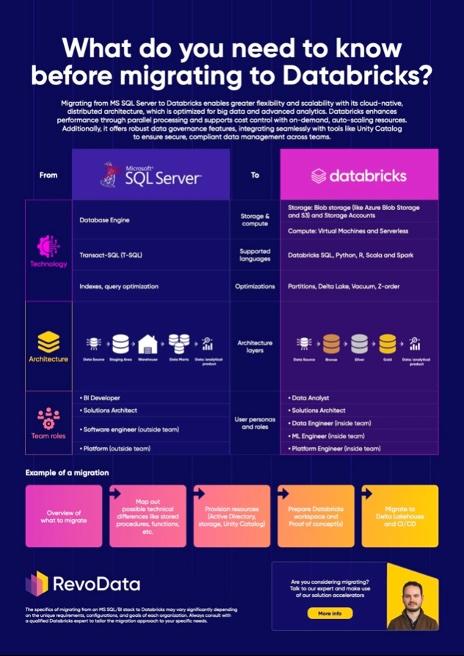
One of the pillars of a migration from MSBI to Databricks is orchestration. For years, SQL Server Agent has been the trusted solution for scheduling and automating tasks. It’s simple, well integrated with SQL Server, and has been the backbone of countless ETL jobs, backups, and maintenance routines. But as we look at modern data platforms like Databricks, the question arises: how do Databricks Workflows compare to the familiar SQL Server Agent?
SQL Server Agent: A Reliable Classic with Limits
SQL Server Agent excels in its simplicity. Its GUI-based interface makes it easy to schedule jobs and monitor execution, and its integration with SQL Server ensures a seamless experience for database administrators and BI developers. However, it was built for an era of monolithic systems, and its limitations become apparent in today’s landscape. Scaling beyond SQL Server, working with distributed data, or integrating with cloud-native tools often feels like trying to fit a square peg into a round hole.
Databricks Workflows: Built for Modern Data Needs
Databricks Workflows, on the other hand, are designed for the complexities of modern data engineering. They bring scalability and flexibility to the forefront, enabling you to orchestrate complex pipelines that span Spark jobs, machine learning models, and real-time analytics. Unlike SQL Server Agent, which is tightly tied to SQL Server, Workflows embrace a multi-cloud, multi-tool environment, integrating seamlessly with APIs, cloud services, and third-party platforms.
The shift to Databricks Workflows also introduces new paradigms, such as event-driven orchestration. Tasks can be triggered by events like file arrivals (Auto Loader) or changes in a database, allowing for real-time automation that SQL Server Agent struggles to achieve. Additionally, Databricks provides advanced monitoring and alerting capabilities, giving you deeper insights into your workflows and the ability to resolve issues quickly.
Making the Transition: Challenges and Opportunities
While the transition might feel daunting at first, it’s essential to focus on the opportunities it brings. The flexibility of Workflows allows teams to start small, using familiar SQL tasks, while gradually exploring more advanced capabilities like PySpark. This approach not only reduces the learning curve but also ensures that your team remains productive during the migration.
Orchestration is more than a technical challenge—it’s a transformation in how we think about automation and scalability. Transitioning from SQL Server Agent to Databricks Workflows requires a shift in mindset, but it’s one that unlocks immense potential for modern data teams.
Join the Conversation
Have you started rethinking your approach to orchestration? What challenges or insights have you encountered? Let’s discuss! And if you’re ready to take the next step, we’re here to help you navigate the transition and make the most of what Databricks has to offer.

Rafal Frydrych
Senior Consultant at RevoData, sharing with you his knowledge in the opinionated series: Migrating from MSBI to Databricks.